The Art Of Growing Older

The Radiance Edit.
When Did Aging Become a Bad Thing?
Somewhere along the way, we stopped seeing aging as a privilege and started treating it like a problem to solve.
Fine lines became flaws. Gray hairs became something to hide. Skin that once told the story of a life well-lived became something to correct, smooth, tighten, and erase.
But when did this happen? When did growing older become something we were supposed to fear?
As an esthetician, I spend a lot of time talking about skin. I believe in caring for it, nourishing it, protecting it, and giving it the attention it deserves. I love the ritual of skincare and the way taking a little time for yourself can make you feel more connected to your body. But I also think it’s important to ask ourselves a question: Are we caring for our skin because we love it, or because we’ve been taught to be afraid of what it might become?
Because there is a difference.
A culture that profits from our fear
The fear of aging isn’t new, but the modern beauty industry has found countless ways to capitalize on it.
Throughout history, beauty standards have changed with culture, class, and the times. Youth has often been associated with fertility, vitality, and social desirability. But in the twentieth century, mass advertising, Hollywood’s emphasis on youthful appearances, and eventually the rise of an increasingly commercialized beauty industry helped turn the desire to look young into a market of its own.

Today, we’re surrounded by filtered faces, carefully curated images, anti-aging promises, and an endless list of things we’re told to fix before they even have a chance to happen.
We’re encouraged to prevent wrinkles before we have them, correct texture that is completely normal, and treat every sign of time as though we’ve done something wrong.
And social media has only made the pressure more personal. We don’t just compare ourselves to celebrities anymore. We compare ourselves to edited versions of people our own age, sometimes even to versions of ourselves that don’t exist outside a screen.
The message is subtle, but it’s everywhere: you can grow older, just make sure you don’t look like it.
I think it’s worth questioning who benefits when women become afraid of their own reflection.
Your skin was never meant to stand still
One of the things I love most about taking a holistic approach to skincare is that it invites us to look beyond the surface.
Our skin is a living organ. It responds to our environment, our hormones, our stress levels, our sleep, our nutrition, and the natural changes that come with time. It protects us, repairs itself, and reflects some of what is happening within our bodies.
And, yes, it changes as we age.
Collagen production gradually declines. Skin may become thinner, drier, or less elastic. Expression lines become more noticeable. These changes are a normal part of being human, not evidence that we’ve failed to take care of ourselves.
Of course, caring for your skin matters. Sun protection, a balanced diet, adequate sleep, stress management, and a thoughtful skincare routine can all support skin health. Professional treatments can also have their place.
But healthy skin and ageless skin are not the same thing.
Healthy skin is skin that is cared for, not skin that has been frozen in time.
I never want the conversation around skincare to become so focused on appearance that we forget the purpose of the skin itself. We can appreciate smoother texture, hydration, and a healthy glow without deciding that every wrinkle is an enemy.
The goal doesn’t have to be to look like we did at twenty forever. The goal can simply be to feel good in the skin we’re in today.
The difference between prevention and fear

There’s nothing wrong with wanting to maintain your skin. There’s nothing wrong with enjoying a facial, investing in quality products, or choosing treatments that make you feel confident.
I believe skincare can be a beautiful form of self-care, but I think the intention behind it matters.
Are you applying your moisturizer because you enjoy the ritual of nourishing your skin? Are you wearing SPF because you want to protect your skin’s health? Are you booking a facial because you want to relax, support your skin, and give yourself a little time to reset?
Or are you doing these things because you’ve been made to feel that your natural face is something you need to apologize for?
The actions might look the same from the outside, but the experience can feel entirely different.
One comes from care. The other comes from fear.
And I think women deserve to experience beauty without feeling as though they’re in a constant battle with themselves.
We can take care of our skin without obsessing over it. We can enjoy beauty treatments without making our self-worth dependent on the results. We can want to look our best without believing that our best years are behind us the moment our faces begin to change.
There is room for both self-care and self-acceptance.
A more holistic way to think about beauty
To me, a holistic approach to beauty means remembering that we are more than what we see in the mirror.
It’s considering how we nourish our bodies, how we manage stress, how we rest, and how we make space for ourselves in a world that constantly asks us to do more. It’s understanding that skin health is influenced by more than the products sitting on our bathroom counters.
It’s also recognizing that our relationship with beauty affects our well-being.
We can spend so much time trying to improve our appearance that we forget to actually live in our bodies. We scrutinize our faces under harsh lighting, zoom in on tiny imperfections, and search for the next product that promises to make us feel better about ourselves.
But sometimes, what we need isn’t another thing to fix. Sometimes, we need a gentler perspective.
Maybe that means treating your evening skincare routine as a moment to slow down instead of another task on your to-do list. Maybe it means stepping away from the accounts that make you feel inadequate. Maybe it means letting your skin be skin, with its pores, its expression lines, its occasional breakouts, and all the little things that make it human.
And maybe it means remembering that caring for yourself should add something to your life, not convince you that you’re never enough.
There is beauty in every season
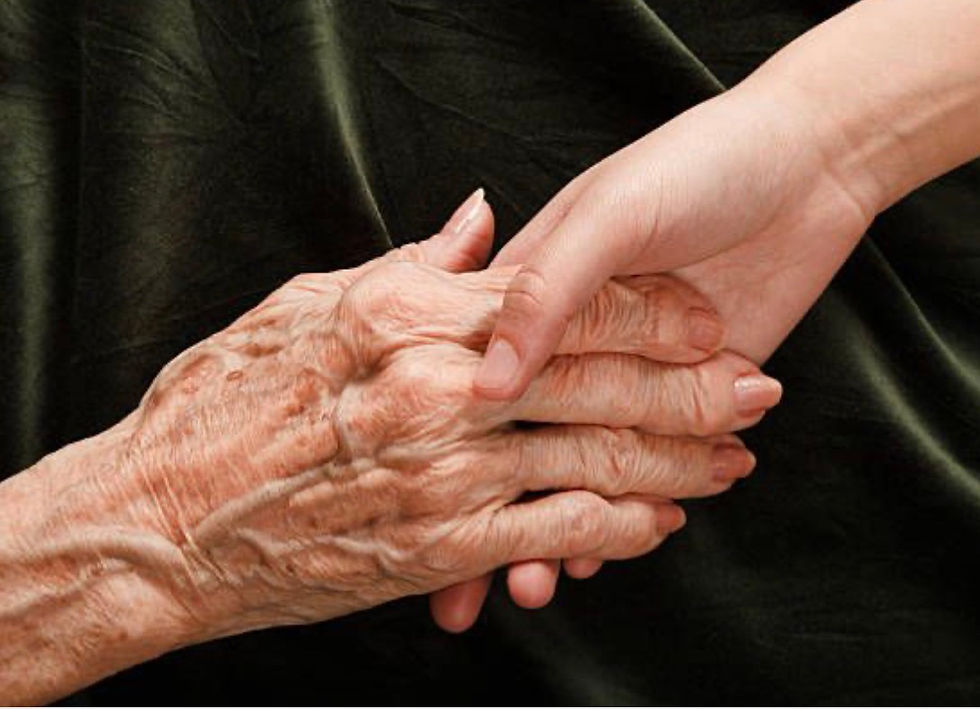
We romanticize the changing seasons of nature all the time.
We love the softness of spring, the fullness of summer, the golden colors of autumn, and the quiet stillness of winter. We understand that each season has its own purpose, and we don’t expect a tree to remain in bloom all year.
So why do we struggle to offer ourselves that same grace?
Our lives move through seasons, too. We grow, change, learn, lose, heal, and become people we couldn’t have imagined being years before. Our experiences leave their marks on us, sometimes visibly and sometimes in ways no one else can see.
Aging is part of that unfolding.
It is more than a change in our skin. It is the opportunity to become wiser, more grounded, more comfortable with who we are, and less interested in meeting every expectation placed upon us.
Of course, growing older isn’t always easy. It can bring physical changes, grief, and uncertainty. We don’t have to pretend every part of aging is wonderful to recognize that it also holds beauty.
But I don’t want us to become so preoccupied with preserving our youth that we forget to appreciate the lives we’re growing into.
I don’t want women to look at their future selves and see someone they need to fight against.
I want us to look forward to becoming more ourselves.
So, when did aging become a bad thing?
Perhaps it happened gradually, through generations of beauty ideals, cultural expectations, advertising, and an industry that learned how profitable insecurity could be.
But I don’t believe we have to keep participating in that narrative.
We can choose a different relationship with beauty. One that values skin health over perfection, nourishment over punishment, and confidence over constant correction.
We can appreciate the science behind skincare while acknowledging that no serum, facial, or treatment can stop time. We can embrace preventative care without treating our natural features as something shameful. We can want to look beautiful and still challenge the narrow definition of beauty we’ve been handed.
And we can remind ourselves that the purpose of skincare was never supposed to be making us afraid to age.
It was supposed to be caring for the skin we have.
At Radiance Esthetics, I believe beauty should feel like coming home to yourself, not chasing an impossible version of who you think you should be. I want skincare to be an opportunity to slow down, reconnect, and care for yourself in a way that feels intentional.
Because radiance isn’t a number. It isn’t the absence of wrinkles or the ability to pass for younger than you are.
It’s the way you care for yourself. The way you carry yourself. The life behind your eyes. The confidence that comes from knowing you don’t have to look untouched by time to be beautiful.
Let’s stop asking how we can look younger forever and start asking how we can care for ourselves beautifully at every age.
After all, the goal was never to stay the same.
It was to keep growing.
With love and radiance,
R- 💌


Comments